Main / Факультеты и кафедры / The Department of Philosophy
The Department of Philosophy

The Department of Philosophy


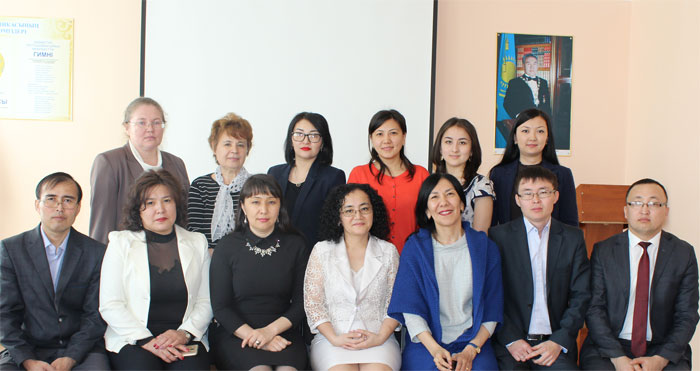
The Department of Philosophy is a creative professional team that provides a humanistic and worldview teaching and training for undergraduate and postgraduate students. The department's activities are aimed at developing personal and professional culture of students, especially critical thinking, civic responsibility, patriotism, and political culture, as well as educating persons active in society based on humanistic values.

Purpose of the Department

Systematic implementation of educational, educational, methodological and research tasks that ensure the training of qualified specialists in the agro-industrial sector of the Republic of Kazakhstan.

Basic Responsibilities of the Department

  • Development of the department as an organizational and coordinating center for the study and development of topical issues of the spiritual and socio-cultural life of the society;
  • Expansion of cooperation with scientific and public organizations of Kazakhstan and foreign countries in order to exchange experience and implementation of joint scientific and educational projects;
  • formation of civic accountability, patriotism and stable moral orientations through the development of work with regional youth;
  • To study the values orientated spiritual world, and socio-political views of young people.


The educational activity of the department is organized in accordance with the educational programs and is carried out at different levels of training. The educational process is carried out in Kazakh, Russian and English. The department provides training in four main subjects.

In the first years, students study the subjects "Political Science and Sociology" and "Cultural Studies". The course "Political Science and Sociology" covers the main theoretical and practical aspects of the political and social structure of society, and "Cultural Studies" is aimed at studying culture as an important sphere of human activity, its evolution and influence on various aspects of public life.

In the second year, the subject "Philosophy" is taught in depth. This course forms philosophical thinking, develops skills of critical analysis and argumentation, and allows you to think about fundamental questions of the worldview.

In all educational programs of the master's program, the course "History and Philosophy of Science" is conducted. The subject considers the formation of scientific knowledge, its historical and philosophical foundations, as well as the interaction of science with other spheres of life and professional activity. This complex of disciplines contributes to the increase of students' independence, the formation of a holistic worldview and the development of the ability to comprehensively analyze current problems of society, culture and science.

In the 2025-2026 academic year, the department successfully implemented important innovations aimed at improving the educational process. For the first time, integration with the international platform Coursera was introduced, and students and undergraduates studying in the department's subjects took online courses at the world's leading universities. The overall indicator of participation and coverage in the educational process exceeded the planned indicator by 4.2 times, which demonstrated the effectiveness of digital educational technologies and the high demand for them.

At the same time, in the 1st semester of the 2025-2026 academic year, the format of the final assessment was significantly updated: instead of the traditional testing and written exam, an alternative model focused on the recognition of educational outcomes was introduced. Student achievements include portfolios, educational and research and creative projects, publications, philosophical podcasts, debates and role-plays, MOOC courses and certificates obtained, as well as social and volunteer activities In fact, it was appreciated. Changes to the Internal Regulations of the University (27.03.2025) Minutes No. 14) and meeting of the department (12.12.2025). The No. 3 was actually done.

The department also systematically provides an inclusive approach: for students with special educational needs, adapted syllabuses and educational and methodological materials are developed, and the final control is carried out, taking into account individual capabilities, including in the format of project work.

The teaching staff of the department consists of 21 people, including 1 PhD, 9 candidates of science and 11 masters of science.


Within the framework of the direction "Scientific internship and professional development", the teachers of the department implement international professional development programs aimed at the introduction of modern managerial and digital practices into the educational process."

From March 2024 to February 2025, Ph.D., Associate Professor Acting Margarita Kakimzhanova underwent a scientific internship at the University of Reading (UK) within the framework of the international program "500-Scientist" in the specialty "Management in the field of education". During the internship, she mastered modern teaching methods, including pedagogical innovations, inclusive education, expert learning, digital technologies and professional development; scientific supervisor: Dr. Sarah Marston, conducted by Professor Iota Dimitriadi and Associate Professor Maggie Copsey-Blake. The program includes Leadership Principles in Education and Pedagogical Innovations for 21st Century Learning: Bridging Theory and Practice in Education Modules ("Pedagogical Innovations in the XXI Century: Combining Theory and Practice in Education") were introduced, strengthening the practical direction of training.

In addition, in June-July 2025, the teachers of the department Sadykova T.M. (Ph.D., Senior Lecturer) and Rakimzhanova S.K. (PhD, Associate Professor M.A.) On the Coursera platform, he has improved his skills by mastering the courses Getting Started with Course Builder and Coursera Certified Administrator. These programs will strengthen the human resources potential of the department, expand international experience and become the basis for the digitalization of the learning process and improving the quality of education.


HISTORY OF THE DEPARTMENT

In 1958, the Department of Marxism-Leninism was founded at the Tselinograd Agricultural Institute, which was engaged in teaching all social sciences, providing ideological support for the Kazakh SSR educational process. The first head of the department was candidate of technical sciences, associate professor I.Y. Portnoy. The first teachers included candidates of historical sciences I.S. Sergeev, I.I. Ivanov, J.I. Iskakov, as well as candidate of economic sciences N.N. Lee.

* 1961 – renamed into the Department of Political Economy;

* 1965 – renamed into the Department of History of the CPSU;

* 1974 – renamed into the Department of Scientific Communism;

Since 1975, the Department of Philosophy began to function as an independent teaching and researching unit. Over the years, the Department was headed by candidates of philosophical sciences, associate professors S.M. Usenov, B.Zh. Zharkenov, doctor of philosophy, professor V.I. Zorin, doctor of philosophy, professor T.K. Burbaev, doctor of philosophy, associate professor A.K. Abdina, doctor of philosophy, professor K.K. Begalinova, candidate of philosophical sciences Kh.S. Abdildina, candidate of philosophical sciences E.E. Mukhanbetkaliyev. At present, the Department of Philosophy is headed by candidate of philosophical sciences, acting associate professor Margarita Kakimzhanova.

The formation of the department and the development of its scientific and educational potential was carried out thanks to the experience and professionalism of highly qualified teachers by associate professors V.P. Sharonova, V.K. Grivenna, V.M. Ageev, A.Zh. Baimagambetova, S.A. Mikhnova, candidates of historical sciences, associate professors V.M. Degay, T.G. Shlyakhtych, T.A. Zhdanova, candidate of political sciences E.A. Shchelokova, as well as a great contribution was made by senior teachers, candidates of philosophical sciences S.A. Zaslavsky, S.M. Tokayev, A.S. Okuneva, S.B. Kasimova, Kh.S. Abdildina, M.K. Kakimzhanova, T.M. Sadykova and others.


International cooperation

The Department of Philosophy systematically develops international relations in the areas of educational, educational, methodological and research activities. Partnership relations are focused on academic exchange, joint scientific initiatives, professional development and the introduction of the best world practices into the educational process.

Within the framework of cooperation, joint work is carried out with foreign universities and scientific organizations. In particular, M.K. Kakimzhanova has  established academic relations with the University of Reading (Great Britain). Z.A. Kaskarbayeva develops partnership relations with the Kyrgyz National University named after Yusuf Balasagun.T.M. Sadykova and A.G. Gapasova maintain  scientific and academic relations with the National Academy of Sciences of the Kyrgyz Republic; these teachers studied at the Institute of Philosophy of the Academy and successfully defended their dissertation research, which strengthens scientific continuity and develops stable professional contacts within the framework of joint initiatives. At the same  time, the department is in contact with the Ural Federal University named after B.N. Yeltsin (Russia, Yekaterinburg) supports professional relations: cooperation is carried out through the Institute of Public Service and Entrepreneurship, including  with the participation of I.B. Britvina. International cooperation expands the scientific agenda of the department, contributes to the development of research competencies of teachers and students, and strengthens the academic reputation of the university.


MEMORANDUMS OF COOPERATION OF THE DEPARTMENT OF PHILOSOPHY WITH ORGANIZATIONS

The department develops partnership relations with domestic educational and scientific and expert organizations on the basis of memorandums. These agreements are aimed at expanding academic and scientific cooperation, implementing joint projects, exchanging experience and improving the quality of the educational process. The main partners of the department:

  • I. Zhansugurov Zhetysu University – joint research work, exchange of experience, guest lectures, academic mobility, joint scientific events;
  • Yessenov University – Department of Academic Mobility, Educational, Methodological and Scientific Initiatives, Exchange of Experience, Guest Lectures;
  • "Institute of Parliamentarism" - research, educational and analytical activities: analysis and discussion of draft laws, joint projects, expansion of the scope of scientific and educational work.

These partnerships provide an additional opportunity to introduce modern research and applied approaches to the educational process, as well as to the professional development of teachers and students.


Zhetysu University named after I. Zhansugurov


Yessenov University, Department of "Public Library and APK"


RSE REM "Institute of Parliamentarism"

RESEARCH ACTIVITY

The research work of the department is aimed at interdisciplinary research and the introduction of modern social and humanitarian technologies into the educational environment of agrotechnical nature. The department covers the areas of history and social philosophy, ethics and aesthetics, philosophy of culture, religious studies, Kazakh philosophy, socio-cultural transformations, intercultural communication and gender studies.

The department also systematically develops scientific communication: teachers make reports at international and republican conferences and seminars, organize scientific events and expand professional scientific contacts.


Head of the department, scholarship holder "Bolashak" Kakimzhanova M.K.  organized by the Republican Scientific Seminar "Human Capital in the Academic Environment: Inclusion, Equality, Diversity and the Experience of the University of Reading in the UK" (February, 2025)


Republican scientific seminar “International Experience as a Resource for Kazakhstan’s Development: The Role of Bolashak Program Alumni in Shaping Inclusive Innovations” (November, 2025)

The department demonstrates a constant publishing activity: teachers regularly publish the results of research in international and domestic scientific publications, including journals indexed in the databases of Scopus and Web of Science, as well as in publications submitted by national lists. According to the data of the department, the Hirsch index of teachers 3 This indicates the stability of the citation of the teaching staff and the accumulated research contribution:

The department also provides ongoing support for the scientific work of students and undergraduates. Within the framework of the recognition of the results of alternative education, scientific activity was increased, and with the scientific and methodological support of the department, students prepared scientific articles and submitted them for publication; This has contributed to the strengthening of academic writing skills and research culture.

TEACHING AND METHODOLOGICAL WORK

The Department of Philosophy’s teaching and methodological activities are organized and implemented systematically in full compliance with the regulatory documents of the Ministry of Education and Science of the Republic of Kazakhstan and with standard discipline curricula.

The Department prioritizes faculty professional development and strengthens its methodological capacity through peer class observations, open lectures, professional exchange, and continuing professional development courses. Academic staff regularly attend specialized trainings and seminars and continuously upgrade their qualifications (inclusive education, contemporary approaches to higher education teaching, 72-hour professional development programs).

In the area of digital education, the Department produces video lectures and develops online courses in the university studio. Faculty members have designed courses in the MOOC format and, using the “Jalingo Studio” software system, completed content recording and editing and uploaded materials to the platform.

The Department’s methodological seminars are held in accordance with the annual plan and focus on contemporary teaching methods, interdisciplinary integration, and the formation of students’ worldview. Seminars are also organized at the university and faculty levels, offering practical recommendations on relevant topics such as gamification, interactive teaching methods, and women’s leadership.

To enhance the quality of the educational process, the Department regularly conducts open classes. Effective pedagogical approaches are applied, including case studies, debates, concept mapping, and cultural-historical as well as structural-functional analysis.

Within the plan for developing teaching and methodological resources, in recent years the Department’s faculty have published textbooks, teaching manuals, and scholarly monographs that strengthen methodological support for the educational process and contribute to the Department’s research activities. Teaching publications recommended by the Academic and Methodological Council are used in bachelor’s and master’s degree programs: they provide methodological support for courses, develop students’ independent learning skills, and contribute to improved teaching and learning quality.

SCHOLARLY MONOGRAPHS PUBLISHED BY THE DEPARTMENT’S FACULTY

TEXTBOOKS BY THE DEPARTMENT’S FACULTY RECOMMENDED BY THE REPUBLICAN ACADEMIC AND METHODOLOGICAL COUNCIL

These publications expand the Department’s academic and methodological resources, enrich the content of academic courses, and support the development of modern teaching and learning approaches at the university.

In addition, within the multilingual education program, a number of courses were delivered in English, and syllabi as well as electronic teaching and methodological packages were regularly updated in three languages.

The Department is taking concrete steps to improve the quality of education through systematic planning of teaching and methodological work, exchange of pedagogical experience, development of digital content, and the implementation of inclusive education approaches.

Student life

Educational work of the department: personal and professional development of students

Within the framework of educational work, the department systematically implements initiatives in the civic-patriotic, legal, spiritual-moral, cultural and educational directions. The work is aimed at the promotion of national values, the formation of civic responsibility of students, the preservation of national identity, the strengthening of cultural and spiritual harmony.

The department annually holds the Philosophy Week on the occasion of the World Philosophy Day, as well as a scientific symposium dedicated to the Day of Science. During the academic year, curatorial hours, round tables, open lectures, debates and creative meetings are organized dedicated to important state, socio-political and cultural days. Poetry evenings and meetings with cultural figures, famous writers also take an important place.  Meeting with such creative people as E.A. Popov, R. Seisembayev, as well as writer and screenwriter Ularbek Nurgalymovich.

Opening ceremony of the symposium "Modern youth and national culture: dialectics of tradition and innovation".

Participants – 300+ representatives of academic circles (April, 2025)


The closing ceremony of the symposium. Participants – 300+ representatives of academic circles (April, 2025)

Famous writer, prose writer, playwright and essayist Evgeny Anatolyevich Popoven enlightenment meeting in the format of an open dialogue (December, 2025)

Scientific dialogue platform within the framework of the World Philosophers' Day  – representatives of 300+ academic circles (November, 2025)

Cultural and educational excursion "Journey to Ethnoaul" (September, 2025)

An important platform for educational and educational activity is  the ethno-auditorium "Culture of the Great Steppe". It is an educational and cultural university space in the direction of cultural education, for the implementation of research projects of students and teachers. Cultural and educational meetings and creative events are held here, the spiritual development of young people is supported and conditions are created for the in-depth study of historical and cultural heritage.

Opening ceremony of the ethno-auditorium (November, 2025)

Doctor of Philosophy, Professor Burbayev Toleugali Kairzhanovich, PhD Shakirov Symbat Yerkebayuly

Kakimzhanova M.K. (head of the Department)

Student Organizations

Several student organizations operate at the department:  the club "Dostyk" (headed by Kaparova D.D., Bolatbekov E.S.),  the cognitive club "Saryarka" (headed by Abdildina Kh.S.), "Laboratory of Demographic Future" (headed by Kurmanova S.B.), as well as  the center "Perfect person" (headed by Sadykova T.M.). Their common goal is to form students' national self-consciousness and civic responsibility, self-expression and self-expression Development of Chechen skills, strengthening of personality qualities and unlocking of creative potential.


TRAINING CENTER "PERFECT PERSON "

The purpose of the Internship Center "Perfect Person" is to expand the worldview of students, form moral values and support their personal development, based on the spiritual and philosophical heritage of Abai Kunanbayev. The Center systematically organizes educational, cognitive and cultural events aimed at developing the desire of young people for justice, diligence, patriotism, responsibility and self-improvement. The head of the center is Candidate of Physical Sciences Sadykova T.M.

From the opening ceremony of the training center " Perfect Person " (January, 2025)

Famous writer of Kazakhstan, playwright, Rollan Abdrakhmanovich Seisembev and rector of KATSU Kanat MaratovichTireuov (January, 2025)

Republican podcast contest among students of higher education institutions "Philosophy is the iron ore of my specialty"  (November, 2025)

SARYARKA COGNITIVE CLUB

The activities of the club are aimed at increasing the interest of students of the Kazakh Agrotechnical Research University named after Saken Seifullin in classical and modern literature. To create a spiritual culture of students, combining the literary heritage with the requirements of the modern world.


Objectives of the club: Identification and unification of talented students inclined to creativity; formation of a culture of debate and analytical skills; promotion of the best works of literature in the modern Kazakh language.

Number of members: 41 students are members of the club "Saryrka".

Head of the club: Ph.D., Associate Professor Abdildina Khorlan Saduakasovna


International Book Day (February, 2025)

Books analyzed by the club "Saryarka" The prosperous life of great personalities (November, 2024)

Internship meeting - writer, screenwriter Ularbek Nurgalymovich (April, 2025)

Internship meeting with public figures "Dialogue of three generations"  (October, 2025)


LABORATORY "DEMOGRAPHIC FUTURE"

"The laboratory " "Demographic Future"  is  a center for analyzing long-term trends of social changes."

Purpose: To work closely with students within the university. To involve young people in the issues of demography, urbanism and migration and to determine the future directions of the development of society.

Objectives: To establish regular contacts with university students in the direction of research; to involve students in research in the field of demography, urbanism and migration; to develop students' analytical, research and critical thinking skills.

Head of the club: Candidate of Physical Sciences, Associate Professor Kurmanova Saule Bakhitzhanovna.

Event for World Demography Day (September, 2025)

A Guest Lecture. Abibullah Mumji from Turkey (September, 2025)

Meeting with practitioners and psychologists in the field of demography (April, 2025)

A Campaign to Combat Domestic Violence in the Philippines (December, 2025)

 

Contacts

010000 Republic of Kazakhstan,

Astana city, 62 Pobedy Avenue,

Biocorpus, Building No. 2
Tel.: +7 (7172) 384-001,

 e-mail: m.kakimzhanova@kazatu.edu.kz